Polished concrete quotes vary because every warehouse floor is different. The final cost depends on the condition of the concrete slab, the amount of preparation required, the size of the area, the finish level, access, repairs, coatings, edge work and how the space will be used.
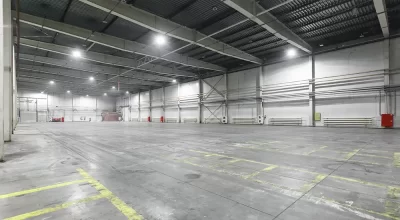
A large open warehouse floor with a sound slab will usually be more straightforward than a damaged floor that needs grinding, patching, cleaning, sealing or detailed preparation before polishing can begin.
For businesses comparing prices, the cheapest quote is not always the best guide. A proper quote should explain what is included, what condition the floor is in and what finish the contractor is allowing for.
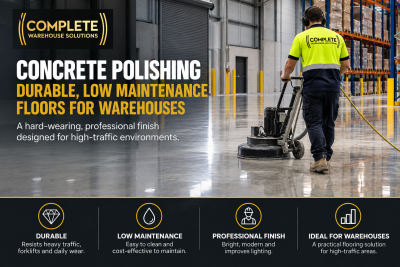
Complete Warehouse Solutions provides concrete polishing as part of broader warehouse preparation, refurbishment and fit out works.
What affects the cost of polished concrete?
The biggest cost factor is the existing condition of the slab. Polished concrete uses the concrete that is already there, so cracks, coatings, glue, uneven sections, stains or surface damage can all affect the preparation required.
Other cost factors include:
| Cost factor | Why it affects the quote |
|---|---|
| Floor condition | Damaged or uneven concrete needs more preparation |
| Floor size | Larger areas may be more efficient per square metre |
| Finish level | A basic industrial finish costs less than a higher decorative finish |
| Existing coatings | Old paint, glue, epoxy or coverings may need removal |
| Repairs | Cracks, holes and damaged sections may need patching |
| Edge work | Edges and corners often take more time than open floor areas |
| Access | Occupied warehouses or tight access can slow the work |
| Timing | After-hours or staged work may increase labour requirements |
This is why two polished concrete floors with the same square metre area can have very different prices.
Why slab condition matters so much
The slab is the foundation of the polished concrete result.
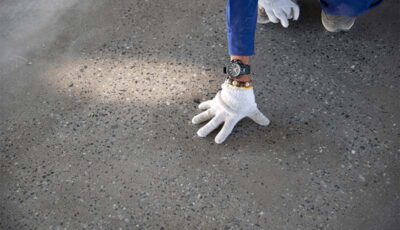
If the slab is clean, level and structurally sound, the polishing process may be more straightforward. If the slab has damage, contamination, old coatings or uneven areas, more grinding and preparation may be needed before the floor can be finished.
Common slab issues include:
- cracks
- holes
- surface wear
- old tile glue
- paint or coating residue
- oil or chemical staining
- uneven concrete
- soft or dusty surface areas
- previous patch repairs
In a warehouse refurbishment, the floor may also be affected by old racking, machinery, storage zones or previous tenancy use.
That is why polished concrete should be assessed as part of the overall warehouse condition, not treated as a simple square metre price only.
Why warehouse use changes the quote
A warehouse floor is not only there to look good. It needs to support daily operations.
The floor may need to handle forklifts, pallet movement, foot traffic, stock handling, loading areas, packing zones and cleaning equipment. These requirements can affect the level of finish and preparation needed.
For example, a showroom-style finish may not be necessary for a back-of-house warehouse area. A practical industrial finish may be the better choice if durability and maintenance are the main priorities.
If the floor is part of a larger warehouse fit out, the polishing work should also be planned around racking, storage areas, access paths and line marking.
Why some polished concrete quotes are cheaper
A cheaper polished concrete quote may be cheaper because it includes less preparation, fewer grinding stages, a lower finish level, limited repair work or fewer allowances for site conditions.
That does not automatically make it wrong. A basic finish may be suitable for some warehouse floors.
However, when comparing quotes, businesses should check:
- what preparation is included
- whether repairs are allowed for
- whether old coatings need removal
- what finish level is included
- whether edge work is included
- whether sealing or protection is included
- whether the work is staged around operations
- whether the quote suits warehouse use
The key is not to compare price alone. Compare scope.
Average polished concrete prices per square metre
Polished concrete prices are usually quoted per square metre, but the rate depends heavily on the site and finish.
A simple open warehouse floor may be more cost-effective than a smaller, detailed or damaged floor. Large spaces can sometimes reduce the average rate because equipment can move more efficiently across the area.
However, if the floor needs heavy preparation, repairs, coating removal or detailed edge work, the price per square metre can increase.
This is why an inspection is usually needed before giving a reliable polished concrete cost for a commercial or warehouse floor.
Is polished concrete worth the cost?
Polished concrete can be worth the cost when a business wants a durable, low-maintenance floor for a warehouse, workshop, showroom or commercial space.
It can be a practical option because it uses the existing concrete slab instead of adding a separate floor covering. This can reduce future issues such as tiles cracking, vinyl lifting or coatings wearing away in high-traffic areas.
Polished concrete may be especially useful during a warehouse refurbishment where the business wants to improve the appearance and usability of the floor before adding racking, storage systems or work zones.
How to reduce polished concrete costs
The best way to reduce polished concrete costs is to define the required finish clearly before work begins.
Not every warehouse needs a high-end decorative finish. Some floors only need a durable, clean and practical industrial finish.
Ways to control costs include:
- choosing a finish suited to warehouse use
- clearing the floor before work starts
- identifying damaged areas early
- removing unnecessary obstructions
- planning around racking and storage installation
- avoiding last-minute scope changes
- combining floor works with a broader fit out schedule
If the floor is being prepared as part of a full warehouse setup, it is usually better to plan concrete polishing before pallet racking, line marking and storage systems are installed.
What should be included in a polished concrete quote?
A polished concrete quote should clearly explain the scope of work.
It should outline:
- the floor area
- preparation requirements
- grinding stages
- repair allowances
- finish level
- sealing or protection
- edge work
- access requirements
- timing
- exclusions
- any assumptions about floor condition
For commercial and warehouse projects, the quote should also consider how the work fits into the broader site plan.
Internal links to add
Use these naturally in the blog:
- concrete polishing
- warehouse fit out
- pallet racking
- Existing blog: polished concrete floors over tiles or wood
Summary
Polished concrete quotes vary because warehouse floors differ in slab condition, size, preparation needs, finish level, access and intended use. A low quote may include less preparation, fewer repairs or a simpler finish. Businesses should compare the full scope, not only the square metre rate. For warehouses, polished concrete is often worth considering because it can create a durable, low-maintenance surface suitable for daily commercial use.
FAQs
How much should polished concrete cost?
Polished concrete cost depends on floor size, slab condition, finish level, preparation, repairs and access. A site inspection is usually needed before an accurate commercial warehouse quote can be provided.
Is polished concrete cheaper than tiles?
It can be cost-effective for large warehouse and commercial areas because it uses the existing slab rather than adding a separate floor covering. The final cost depends on the slab condition and finish required.
Is polished concrete worth it for a warehouse?
Yes, it can be worth it when the warehouse needs a durable, easy-to-clean and low-maintenance floor surface.
How can I save money on polished concrete?
You can reduce costs by choosing the right finish level, clearing the floor before work starts, identifying repairs early and planning the work before racking or storage systems are installed.