Quick Answer
Choosing the right warehouse racking system depends on what you store, pallet size and weight, stock rotation, required access, forklift operation, available floor and height, and how much storage capacity you need.
There isn’t one racking system that suits every warehouse. Selective, drive-in and cantilever racking all solve different storage problems, which is why the layout should be designed around how the warehouse actually operates.
What Types of Warehouse Racking Systems Are Available?
Complete Warehouse Solutions supplies several types of warehouse racking, including selective pallet racking, drive-in racking and cantilever racking. Each has a different purpose.
Selective Pallet Racking
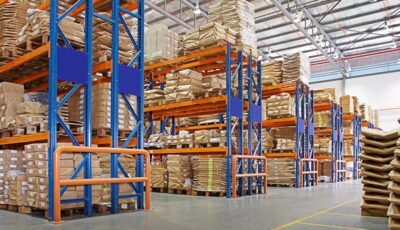
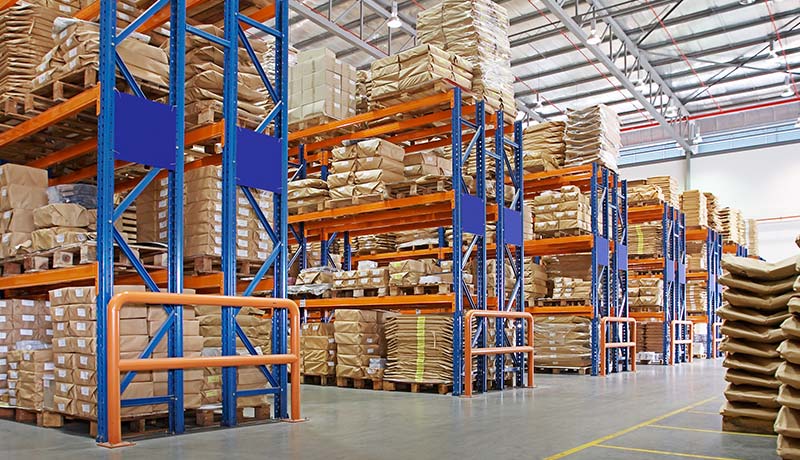
Selective racking provides direct access to individual pallet locations and is the most common pallet racking system.
It works particularly well where businesses have a large number of SKUs or need frequent access to different products. Complete Warehouse Solutions describes selective racking as its most flexible and cost-efficient pallet racking option.
Drive-In Racking
Drive-in racking provides higher-density storage by reducing the number of aisles required.
Forklifts enter the storage lanes to place or retrieve pallets, so it is better suited to larger quantities of similar products where stock rotation is less frequent.
Cantilever Racking
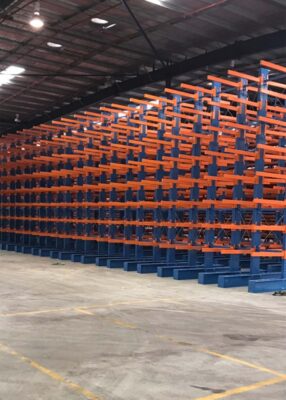
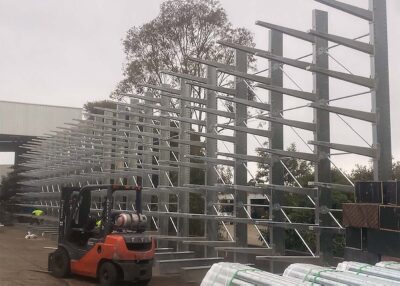
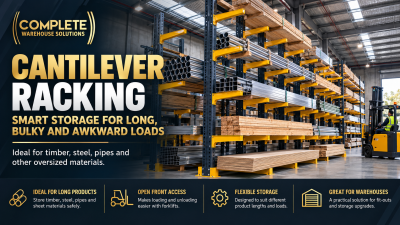
Cantilever racking is designed for long or awkward products such as timber, steel, pipes, sheet materials and similar stock that does not fit neatly onto conventional pallet racks.
How Much Storage Space Does Your Warehouse Need?
More racking does not automatically mean a better warehouse.
A good storage design needs to balance capacity with:
- forklift access
- picking requirements
- aisle widths
- stock movement
- loading and dispatch areas
- pedestrian access
- building columns and doors
- available warehouse height
CWS specifically considers storage density, floor space, building height, inventory access, stock rotation and load size when designing pallet racking systems.
This is where racking should be considered as part of the overall warehouse fit-out, not simply installed wherever floor space happens to be available.
What Type of Products Will You Store?
The products themselves should be one of the first considerations.
Ask:
- Are they palletised?
- Are all pallets the same size?
- Are products long or oversized?
- How heavy are the loads?
- Do products have expiry dates?
- How many pallets of each SKU are stored?
- How frequently are they picked?
For example, selective racking may suit a warehouse with many different products that require regular access, while drive-in racking may suit bulk quantities of similar stock.
Long products such as timber or steel may point towards cantilever racking instead.
How Do You Choose the Right Rack Load Capacity?
Rack capacity should never be estimated simply from the appearance of the racking.
Capacity depends on the design of the system, including its uprights, beams, arms, bay configuration and the loads it was designed to support.
The weight and dimensions of the goods being stored therefore need to be established before the rack is specified.
Load signage and manufacturer or engineering information should then be followed once the system is in operation.
What Should You Consider When Planning the Warehouse Rack Layout?
The best racking layout is one that supports the way stock moves through the warehouse.
Consider how goods travel from:
receiving → storage → picking → packing → dispatch
Forklift routes are equally important.
A layout with enormous theoretical storage capacity may perform poorly if forklifts cannot move efficiently or staff constantly need to move other stock to reach the products they need.
CWS approaches racking as part of complete warehouse design and fit-out, including consultation, measurement, layout planning, supply and installation.
Think About Future Changes Too
Warehouses rarely stay exactly the same.
Product ranges change. Businesses expand. Stock profiles change.
Where possible, the racking design should allow for future changes rather than simply satisfying today’s requirements.
Selective systems, for example, can be adjusted as inventory requirements change, while cantilever systems can be configured around different product lengths and capacities.
Don’t Forget Racking Compliance
Warehouse racking is part of the workplace structure and needs to be installed, operated and maintained safely.
SafeWork NSW advises that pallet racking should be regularly inspected and that formal inspections should be carried out by a competent person at intervals not exceeding 12 months, with AS 4084 providing guidance for steel storage racking.
This is another reason to involve experienced warehouse-racking specialists rather than treating racking as simply shelving.
Summary
Choosing the right warehouse racking system starts with understanding the warehouse rather than choosing the rack.
Product type, load weight, stock rotation, forklift access, storage density and future requirements all influence the best solution.
Selective pallet racking provides excellent accessibility, drive-in racking can significantly increase storage density, and cantilever racking is designed for long and awkward products.
The right answer may also involve combining different systems within the same warehouse.
What are the different types of warehouse racking systems?
Common options include selective pallet racking, drive-in racking and cantilever racking. Other specialised systems may be used depending on the products and warehouse operation.
What is the most common warehouse racking system?
Selective pallet racking is one of the most commonly used systems because individual pallets remain readily accessible. CWS describes it as its most common and flexible pallet-racking solution.
What is the maximum load capacity of warehouse racking?
There is no single maximum capacity for all warehouse racks. Capacity depends on the engineered design and components of the particular system. The specified load limits for that installation must be followed.