A mezzanine lift makes it easier to move pallets, stock, trolleys and bulky goods between warehouse levels without relying on workers to carry loads up stairs or requiring forklifts to operate on an upper level.
The main benefits include improved material flow, better use of mezzanine space, reduced manual handling, greater productivity and a safer way to move suitable goods vertically through a warehouse.
How Does a Mezzanine Lift Improve Warehouse Space Utilisation?
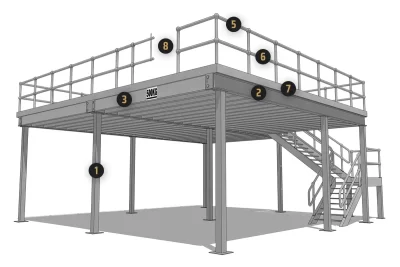
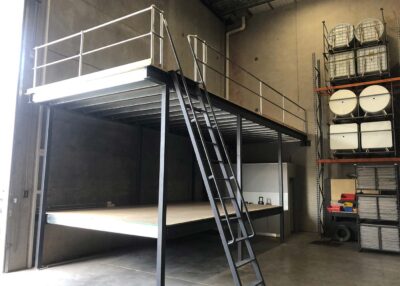
A mezzanine floor allows a business to create additional usable space without increasing the warehouse footprint.
But that extra space is only genuinely useful if goods can move efficiently between levels.
Complete Warehouse Solutions designs its warehouse goods lifts around the load requirements, travel height and available space of the individual site. Its systems can transport pallets, trolleys and bulky or awkward stock between levels.
This makes upper-level storage much more practical.
Instead of restricting the mezzanine to lightweight items employees can carry upstairs, a suitable lift can allow a much wider range of stock to be stored there.
Can a Mezzanine Lift Improve Productivity?
Yes, particularly where goods regularly move between levels.
Without a lift, staff may need to:
- carry items upstairs
- make multiple trips
- transfer loads between equipment
- wait for suitable handling equipment
- manually move awkward stock
A mezzanine goods lift creates a dedicated vertical material-handling route.
Stock can be loaded, transferred to the required level and unloaded closer to where it is needed.
CWS describes this as a way to streamline warehouse operations and keep stock moving without needing forklifts on upper levels.
How Does a Mezzanine Lift Improve Workplace Safety?
One of the most important benefits is reducing the need to carry goods on stairs.
SafeWork NSW specifically advises that ladders should not be used where workers are required to carry items while accessing or leaving mezzanines. It also requires appropriate barriers and guarded openings around mezzanine loading areas.
A lift can remove much of the vertical carrying from the process.
That doesn’t eliminate every manual-handling task — workers may still load and unload goods — but it can significantly reduce repetitive lifting and carrying between floors.
What Types of Goods Can Be Transported?
That depends on the particular lift and its rated capacity.
CWS’s mezzanine lift systems are designed for goods including:
- pallets
- cartons and stock
- trolleys
- equipment
- heavy items
- bulky or awkward products
The company specifically designs each lift around required loads, available space and travel height rather than treating every installation as identical.
How Much Weight Can a Warehouse Mezzanine Lift Carry?
There isn’t one load capacity that applies to every lift.
Capacity should be selected around the type and weight of goods the business actually needs to move.
The rated capacity of the installed system should never be exceeded.
This is also why businesses shouldn’t simply choose the largest or cheapest lift available. The lift needs to suit both the mezzanine and the warehouse operation.
Can a Mezzanine Lift Reduce Material-Handling Costs?
Potentially.
The benefit isn’t simply replacing labour with a machine.
A better material flow can reduce:
- repeated trips between levels
- time spent manually carrying goods
- unnecessary stock movements
- reliance on upper-level forklift access
- interruptions to picking and replenishment
Over time, those efficiencies can become particularly valuable in a busy warehouse where goods move between levels throughout the day.
What Is the Difference Between a Mezzanine Lift and a Freight Elevator?
The terminology can vary depending on the equipment and application.
For CWS, the focus is on industrial goods lifts designed to move stock and materials between warehouse levels.
Whether a particular lift is designed or approved to carry people depends on its classification, design and applicable requirements. It should never be assumed that a goods lift can be used as a passenger lift.
What Safety Requirements Apply?
A goods lift is plant and needs to be managed accordingly.
SafeWork NSW says those with management or control of lifts have duties to ensure they operate safely and are regularly inspected and maintained. Risks can include uncontrolled movement, doors, mechanical failure and unsafe maintenance conditions.
CWS’s systems can incorporate features such as enclosed shafts, safety interlocks, automated gates and lockable access controls.
The mezzanine itself also needs to be engineered for the loads it carries, including load-handling equipment.
How Much Does a Warehouse Mezzanine Lift Cost?
There is no meaningful single price because installations vary.
Factors can include:
- required load capacity
- travel height
- platform size
- number of levels
- enclosure requirements
- gates and interlocks
- control system
- building modifications
- installation access
For that reason, the lift should be quoted around the actual warehouse rather than chosen from a generic price alone.
How Do You Choose the Right Mezzanine Lift?
Start with the goods, not the lift.
Consider:
- What needs to be transported?
- What is the heaviest load?
- What are the load dimensions?
- How frequently will goods move?
- How far must the lift travel?
- Where will goods enter and leave the lift?
- How does it integrate with the mezzanine and wider warehouse layout?
A lift planned together with the mezzanine and warehouse fit-out will usually produce a better result than adding one after the warehouse is already operating.
Summary
A warehouse mezzanine lift can make upper-level storage substantially more useful.
It provides a dedicated way to move stock between floors, reducing manual carrying, improving workflow and allowing pallets, trolleys and bulky goods to reach mezzanine storage more efficiently.
The key is to choose a lift around the loads being moved, the warehouse layout and the mezzanine itself.
Complete Warehouse Solutions can integrate the goods lift with the wider mezzanine and warehouse fit-out rather than treating it as a standalone piece of equipment.
How much does a warehouse mezzanine lift cost?
Cost depends on load capacity, travel height, platform dimensions, safety features, controls and the complexity of the installation.
How much weight can a mezzanine lift carry?
There is no universal capacity. The lift needs to be designed and rated for the goods the warehouse intends to transport.
Is a mezzanine lift the same as a passenger elevator?
Not necessarily. A goods lift is designed around moving stock and materials. Whether people may use a particular lift depends on its specific design and classification.
How do I choose the right lift?
Start with load weight and dimensions, frequency of use, travel height, available space and how goods need to move through the warehouse.