What Are the Benefits of Mezzanine Flooring in a Warehouse?
Body
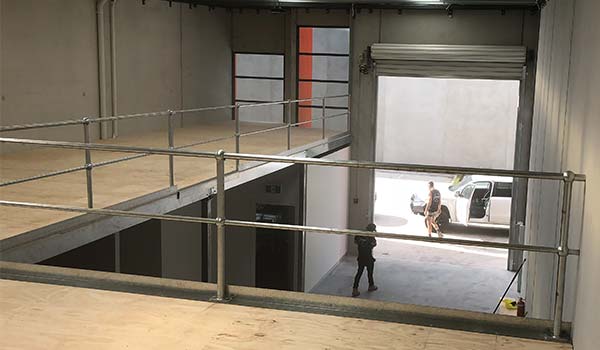
The main benefit of mezzanine flooring in a warehouse is that it creates extra usable space inside the existing building. Instead of moving to a larger site or extending the warehouse, a mezzanine floor uses vertical height to add another level for storage, work areas, offices or equipment.
Warehouse mezzanine floors can help businesses increase capacity, improve organisation and separate different operational zones. They are especially useful when the warehouse has unused height but limited ground floor space.
Complete Warehouse Solutions designs and installs warehouse mezzanine floors as part of practical warehouse storage, fit out and refurbishment projects.
Key benefits of mezzanine flooring
| Benefit | Why it matters |
|---|---|
| Creates extra space | Adds usable floor area without relocating |
| Uses warehouse height | Turns unused vertical space into working space |
| Improves storage capacity | Helps organise stock, parts or equipment |
| Supports business growth | Allows more use of the existing site |
| Separates work zones | Can divide storage, packing, offices and operations |
| Can reduce relocation pressure | Helps avoid moving to larger premises too soon |
| Flexible design | Can be designed around the warehouse layout |
A mezzanine floor is not just a storage platform. It can change how the warehouse operates.
More usable space without moving
One of the biggest benefits of mezzanine flooring is that it can increase usable floor area without changing the building footprint.
This can be valuable when:
- the warehouse is running out of storage space
- moving would be expensive or disruptive
- the site has enough height but limited ground floor area
- the business wants to stay in the same location
- extra work zones or storage areas are needed
For many businesses, adding a mezzanine floor can be more practical than relocating.
Better use of vertical warehouse space
Many warehouses have unused space above the ground floor. A mezzanine floor turns that empty height into productive space.
This can be used for:
- stock storage
- archive storage
- spare parts
- packing benches
- offices
- equipment platforms
- staff areas
- light work areas
A warehouse mezzanine system can help make better use of the building that already exists.
Improved storage and organisation
Mezzanine storage can help separate different types of stock or work areas.
For example, slower-moving items, spare parts, packaging materials or archive stock may be stored on the mezzanine, while the ground floor remains available for forklift movement, dispatch, receiving and heavier stock.
This can improve warehouse flow because the ground floor is not overloaded with every activity.
Better workflow and separation of zones
A mezzanine floor can help divide a warehouse into clearer working zones.
For example:
- storage above, dispatch below
- offices above, operations below
- spare parts above, workshop below
- packing areas above, pallet storage below
- archive storage above, active stock below
This can make the warehouse easier to manage and safer to operate.
A mezzanine may also form part of a larger warehouse fit out where storage, access, flooring, safety and workflow are planned together.
Useful for warehouse refurbishments
Mezzanine floors can also be useful during warehouse refurbishments or site upgrades.
If a business is reorganising an existing warehouse, a mezzanine may help create extra storage or office space without taking more ground floor area away from operations.
This is especially useful when combined with pallet racking, floor preparation, safety barriers, line marking and other fit out works.
Flexible design options
Mezzanine floors can be designed for different warehouse needs.
Common options include:
| Mezzanine type | Common use |
|---|---|
| Structural mezzanine floor | General storage, work areas or offices |
| Steel mezzanine floor | Industrial and warehouse use |
| Storage mezzanine | Stock, parts or archive storage |
| Office mezzanine | Admin or staff areas above warehouse space |
| Rack-supported mezzanine | Storage below with usable space above |
The right design depends on load requirements, available height, access, safety and the intended use.
Can a mezzanine floor reduce costs?
A mezzanine floor may help reduce costs by delaying or avoiding the need to relocate to a larger warehouse.
Relocation can involve lease changes, downtime, transport, fit out, racking, new services and operational disruption.
A mezzanine floor still has a project cost, but it may be a practical investment if the existing warehouse has enough height and the business mainly needs more usable space.
What should be considered before installing mezzanine flooring?
Before installing mezzanine flooring, a business should consider:
- available roof height
- floor area required
- load capacity
- access stairs
- pallet gates
- handrails and barriers
- forklift movement below
- lighting
- fire access
- workflow
- what will be stored or used above
- future growth
The design should match the warehouse operation, not just the available space.
Is mezzanine flooring right for every warehouse?
No. Mezzanine flooring is only suitable where the building has enough height, access and structural conditions to support the intended use.
It may not be the best option if the warehouse has low clearance, poor access, unsuitable layout or stock that is better stored in high-density racking.
A site assessment is needed to confirm whether a mezzanine floor is practical.
Internal links to add
Use these naturally in the article:
Summary
The main benefit of mezzanine flooring in a warehouse is that it creates extra usable space without needing to relocate or extend the building. Warehouse mezzanine floors help businesses use vertical height for storage, offices, packing areas, equipment platforms or work zones. They can improve storage capacity, organisation, workflow and site efficiency when the building has enough height and the design matches the warehouse operation.
FAQs
What are the benefits of mezzanine flooring?
Mezzanine flooring creates extra usable space, improves storage capacity, makes better use of warehouse height, separates work zones and may reduce the need to relocate.
What is the purpose of a mezzanine floor in a warehouse?
The purpose of a mezzanine floor is to add another usable level inside the warehouse for storage, offices, work areas, equipment or operational space.
Does a mezzanine floor increase storage space?
Yes. A mezzanine floor can increase storage space by using vertical height above the existing ground floor.
What should be checked before installing a mezzanine floor?
Important checks include height clearance, load capacity, access, stairs, pallet gates, safety barriers, lighting, fire access, forklift movement and how the space will be used.