Drive-in racking is usually better when a warehouse needs high-density pallet storage for large quantities of similar products. Selective racking is usually better when the warehouse needs direct access to every pallet.
The best choice depends on whether storage density or pallet access matters more.
If your warehouse has limited floor space and stores repeat pallet loads, drive-in racking may be suitable. If your warehouse stores many different products that need regular picking, selective pallet racking may be the better option.
Drive-in racking vs selective racking
| Feature | Drive-in racking | Selective racking |
|---|---|---|
| Best for | Bulk storage of similar products | Mixed stock and frequent picking |
| Storage density | High | Lower |
| Pallet access | Limited | Direct access to every pallet |
| Aisle space | Reduced | More aisles required |
| Forklift movement | Forklift enters rack lanes | Forklift works from aisles |
| Stock rotation | Needs careful planning | Easier to manage |
| Flexibility | Lower | Higher |
| Typical use | Bulk storage, cold storage, repeat stock | General warehousing and distribution |
There is no single best racking system for every warehouse. The right system depends on stock movement, pallet volume, access needs and available space.
What is drive-in racking?
Drive-in racking is a high-density storage system where forklifts drive into the racking lanes to place or retrieve pallets. Pallets are stored several positions deep, which reduces the number of aisles required.
This type of racking is commonly used when a warehouse stores large quantities of the same or similar products.
Drive-in pallet racking can help increase storage capacity, but it reduces direct access to individual pallets.
What is selective pallet racking?
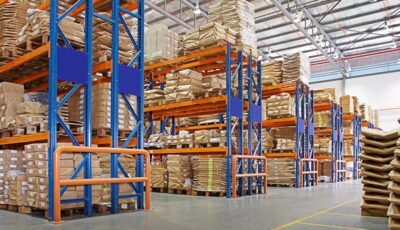
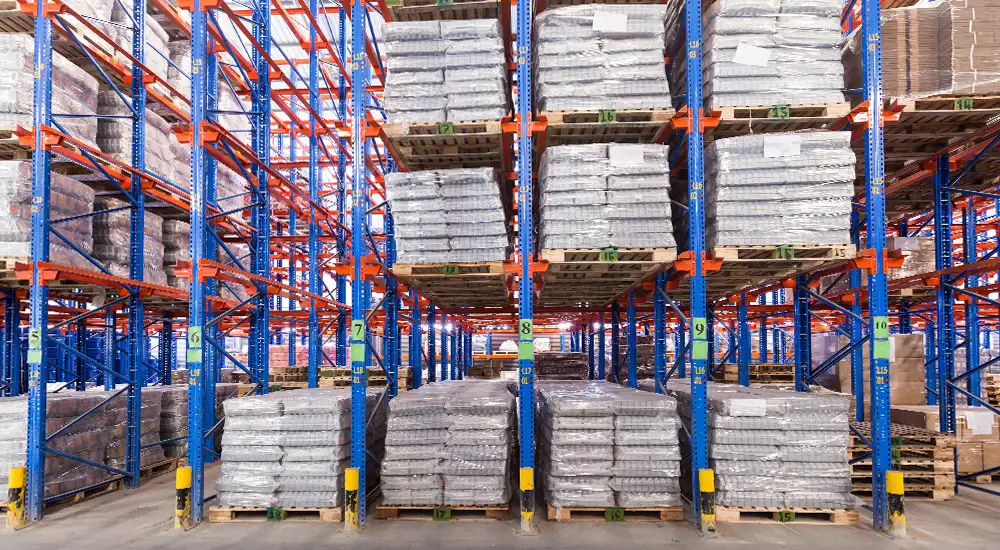
Selective pallet racking is the most common warehouse racking system. Pallets are stored on beams and accessed directly from forklift aisles.
The main benefit is selectivity. Each pallet position can usually be reached without moving other pallets first.
Selective racking is often used in warehouses with many product lines, regular stock movement or frequent picking.
For general storage planning, it is often part of a broader pallet racking system.
Which system stores more pallets?
Drive-in racking usually stores more pallets in the same warehouse footprint because it reduces aisle space.
Instead of having an aisle between every rack row, drive-in racking uses deep storage lanes. This allows more pallet positions to fit into the available floor area.
That makes it useful where storage density is more important than direct access.
Which system gives better access?
Selective racking gives better access because each pallet position is directly reachable from an aisle.
This is why selective racking is usually better for warehouses with:
- many product lines
- mixed stock
- frequent picking
- varied pallet sizes
- fast stock movement
- first-in, first-out stock needs
- regular order fulfilment
If access matters more than storage density, selective racking is usually the safer choice.
When drive-in racking is better
Drive-in racking may be better when the warehouse stores bulk quantities of similar products.
It may suit:
- cold storage
- food and beverage storage
- seasonal stock
- manufacturing inventory
- large batch storage
- slow-moving palletised goods
- high-volume storage areas
Drive-in racking is often chosen when warehouse space is expensive or limited.
When selective racking is better
Selective racking may be better when the warehouse needs flexibility.
It may suit:
- mixed product storage
- frequent picking
- fast-moving stock
- warehouses with many SKUs
- distribution centres
- businesses needing direct pallet access
- stock that changes often
Selective racking is not as dense as drive-in racking, but it is usually easier to manage.
Which racking system is more flexible?
Selective pallet racking is usually the most flexible system because it provides direct access to each pallet. This is often described as 100% selectivity.
Drive-in racking is less flexible because pallets are stored deeper inside the racking structure. It works best when stock movement is predictable.
If a business needs flexibility, selective racking is usually better. If a business needs density, drive-in racking may be better.
Safety and forklift access
Drive-in racking needs careful forklift operation because the forklift enters the racking structure.
This makes design, installation, protection and operator training important.
Key considerations include:
- aisle width
- rack protection
- pallet quality
- load ratings
- forklift type
- driver visibility
- floor condition
- damage inspections
- traffic management
Racking choice should always be part of the wider warehouse fit out plan, not treated as a separate decision.
Which system is better for your warehouse?
Choose drive-in racking if your priority is storing more pallets in less space and your stock is mostly similar or repeat product lines.
Choose selective racking if your priority is direct pallet access, picking flexibility and easier stock management.
The best warehouse layout may also use more than one racking type. Some sites use selective racking for fast-moving goods and drive-in racking for bulk storage.
Internal links to add
Use these links naturally:
Summary
Drive-in racking is usually better for high-density pallet storage, while selective racking is better for direct access and flexibility. Drive-in racking suits warehouses with large quantities of similar products, bulk storage and limited space. Selective pallet racking suits warehouses with mixed stock, frequent picking and many product lines. The right choice depends on storage density, pallet access, forklift movement, stock rotation and warehouse layout.
FAQs
What is the difference between drive-in racking and selective racking?
Drive-in racking stores pallets deep inside racking lanes to increase storage density. Selective racking stores pallets in rows with direct access from aisles.
Which racking system stores more pallets?
Drive-in racking usually stores more pallets in the same space because it reduces the number of aisles needed.
Is drive-in racking better than selective racking?
Drive-in racking is better for bulk storage of similar products. Selective racking is better for mixed stock and frequent pallet access.