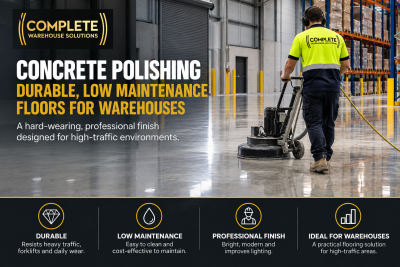
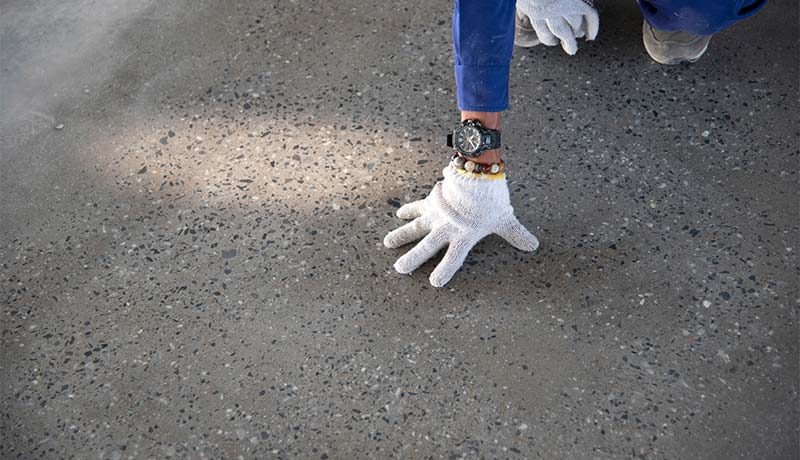
The best way to polish concrete is to prepare the floor properly, progressively grind the surface with suitable diamond tooling, repair defects where necessary, apply a concrete densifier, then continue through increasingly fine polishing stages until the required finish is achieved.
For warehouse and commercial floors, the exact process should be chosen according to the condition of the slab, traffic levels and the finish required.
What Does Concrete Polishing Involve?
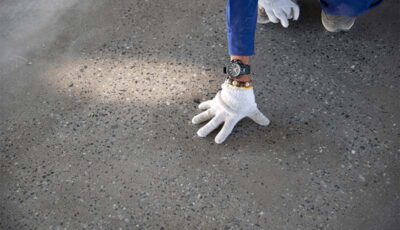
Concrete polishing is a mechanical process that gradually refines the surface of an existing concrete slab.
Rather than covering the floor with another material, the concrete itself is ground and polished to create a smooth, hard-wearing finish.
The final appearance can range from a relatively understated satin finish through to a much higher level of sheen.
For warehouses, workshops and commercial properties, the objective is usually not simply appearance. The floor also needs to cope with regular traffic, equipment and day-to-day operations.
How Do You Prepare Concrete Before Polishing?
Preparation is one of the most important stages.
Before polishing begins, the floor needs to be assessed for:
- cracks
- surface damage
- coatings or adhesives
- uneven areas
- contaminants
- previous repairs
Existing coatings may need to be removed and damaged sections repaired before the main polishing process starts.
Poor preparation can affect both the appearance and performance of the finished floor.
What Are the Steps for Polishing Concrete?
The exact process varies depending on the slab and required finish, but a typical commercial concrete polishing job includes several stages.
1. Inspect the Concrete
The existing slab is checked to determine its condition and the level of work required.
2. Grind the Surface
Diamond grinding equipment is used to remove imperfections and expose a fresh concrete surface.
Coarser tooling is normally used first.
3. Repair Cracks and Defects
Cracks, holes or damaged areas may be repaired so the floor can be polished more consistently.
4. Apply a Densifier
A concrete densifier may be applied during the process to help harden the surface.
5. Progress Through Finer Polishing Stages
The floor is polished using progressively finer abrasives.
Each stage refines the surface further.
6. Complete the Required Finish
The polishing process continues until the required level of finish has been achieved.
The number of stages depends on the condition of the concrete and the final result required.
Which Tools Are Used for Polishing Concrete?
Professional concrete polishing generally requires specialised equipment rather than a standard floor polisher.
Equipment may include:
- planetary concrete grinders
- diamond grinding discs
- progressively finer polishing pads
- industrial dust extraction
- edge grinders
- floor cleaning equipment
Different diamond tooling is used at different stages of the process.
This is one reason professional assessment matters. Using the wrong tooling or progressing through the stages incorrectly can produce an inconsistent finish.
How Many Stages Are Needed to Polish Concrete?
There is no single number that applies to every floor.
A basic commercial finish may require fewer polishing stages than a high-gloss architectural floor.
The number of stages can depend on:
- existing slab condition
- required level of aggregate exposure
- desired sheen
- previous coatings
- traffic requirements
- the intended use of the building
For a warehouse, the practical requirements of the floor are generally more important than achieving the highest possible gloss.
Is Polished Concrete Suitable for Warehouses?
Polished concrete can work well in warehouses and other high-traffic commercial environments because the existing concrete slab becomes the finished floor.
Potential advantages include:
- a durable surface
- straightforward cleaning
- no separate floor covering
- a clean, professional appearance
- suitability for large floor areas
However, the condition of the existing slab needs to be considered before deciding whether polishing is the right solution.
How Do You Keep Polished Concrete Looking Good?
Polished concrete is generally straightforward to maintain, but it still requires regular cleaning.
Good maintenance usually includes:
- removing dust and grit regularly
- cleaning spills promptly
- using suitable floor-cleaning products
- avoiding unnecessarily aggressive chemicals
- periodically assessing high-traffic areas
A properly maintained floor can retain its finish for a long time, although wear will vary according to traffic and how the warehouse is used.
Is Polishing Better Than Applying a Floor Coating?
Not always.
Polished concrete and floor coatings such as epoxy perform different jobs.
Polishing works with the existing concrete surface, while coatings create an additional layer over the slab.
The better option depends on factors including:
- existing floor condition
- traffic
- chemical exposure
- required appearance
- maintenance requirements
- how the warehouse operates
The floor should therefore be assessed as part of the wider property or warehouse refurbishment rather than choosing a finish purely on appearance.
Concrete Polishing as Part of a Warehouse Refurbishment
Concrete polishing is often completed alongside other work rather than as an isolated project.
For example, a warehouse refurbishment or make good may involve:
- removing old pallet racking
- repairing walls and floors
- removing previous fit-outs
- completing electrical works
- polishing the concrete
- preparing the building for a new tenant or operation
Complete Warehouse Solutions can coordinate concrete polishing as part of the wider warehouse refurbishment process, reducing the need to manage multiple contractors separately.
Summary
The best way to polish concrete starts with good preparation.
The floor should be assessed, cleaned and repaired before progressive grinding and polishing begins. Suitable diamond tooling, correct polishing stages and proper maintenance all contribute to the final result.
For warehouses and commercial properties, polished concrete can provide a practical and professional floor finish, particularly when the work is incorporated into a broader refurbishment or make good project.
What does concrete polishing mean?
Concrete polishing is the mechanical grinding and refinement of a concrete surface using progressively finer abrasives to create a smoother finished floor.
Is it worth polishing concrete?
It can be, particularly where an existing concrete slab is suitable and the business wants a durable, relatively low-maintenance finished surface.