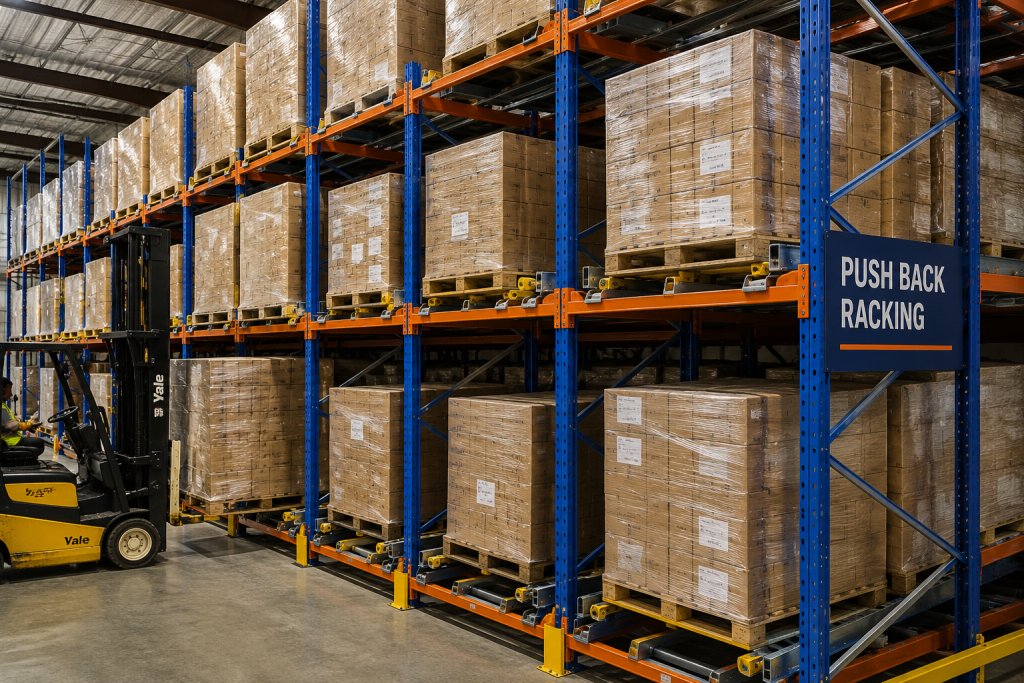
Push Back Pallet Racking Explained: Benefits, Uses and Warehouse Applications
Push back pallet racking is a high-density storage system designed to increase warehouse storage capacity while reducing the number of aisles required.
It is commonly used in warehouse fit-outs and storage upgrades where businesses need to maximise available space without increasing the size of the facility.
For warehouses storing multiple pallets of the same product, push back racking can provide an effective balance between accessibility and storage density.
Quick Answer
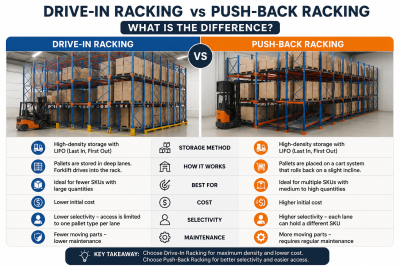
Push back pallet racking is a storage system where pallets are stored on inclined rails using nested carts or rollers.
When a new pallet is loaded, it pushes the previous pallet further back into the lane.
The system:
- increases storage density
- reduces aisle requirements
- improves space utilisation
- supports multiple pallets per lane
How Does a Push Back Pallet Racking System Work?
Push back racking uses a series of rails and carts positioned on a slight incline.
As a pallet is loaded:
- The first pallet sits at the front position.
- The next pallet pushes the first pallet backwards.
- Additional pallets continue pushing the row further into the lane.
When pallets are removed, gravity allows the remaining pallets to move forward automatically.
This creates a Last In, First Out (LIFO) inventory system.
Key Components of a Push Back Racking System
A push back pallet racking system typically includes:
- upright frames
- beams
- inclined rails
- nested carts or rollers
- pallet guides
- structural bracing
These components work together to allow smooth pallet movement while maintaining load stability.
What Are the Benefits of Push Back Pallet Racking?
The main benefits include:
Increased Storage Density
More pallets can be stored within the same warehouse footprint.
Reduced Aisle Space
Fewer aisles are required compared to selective pallet racking.
Improved Accessibility
Each lane can store a specific product type while still allowing direct access.
Better Space Utilisation
Warehouses can often increase storage capacity without expanding the building.
Push Back Racking vs Selective Pallet Racking
Selective pallet racking provides direct access to every pallet position.
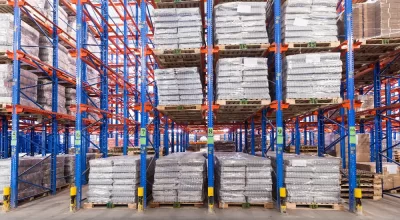
Push back racking stores pallets several positions deep within the same lane.
Selective racking is often better for businesses with a wide range of products and frequent stock rotation.
Push back racking is generally more suitable where larger quantities of the same stock are stored.
Which Industries Commonly Use Push Back Pallet Racking?
Push back systems are commonly used in:
- manufacturing
- wholesale distribution
- food and beverage storage
- retail distribution centres
- third-party logistics facilities
These industries often require high-density storage and efficient use of warehouse space.
Is Push Back Pallet Racking Right for Your Warehouse?
Push back racking can be a strong option when:
- warehouse space is limited
- large volumes of similar products are stored
- storage density is a priority
- a LIFO inventory system is suitable
As part of a warehouse fit-out, push back racking may help increase storage capacity without increasing the warehouse footprint.
Where Push Back Racking Fits Into a Warehouse Project
Push back pallet racking is rarely installed as a standalone solution.
It is often included within:
- warehouse fit-outs
- storage upgrades
- warehouse relocations
- refurbishment projects
Choosing the right racking system is an important part of creating a warehouse layout that supports current operations and future growth.
Summary
Push back pallet racking is a high-density storage solution that helps businesses maximise warehouse space while maintaining efficient pallet access.
When included as part of a well-planned warehouse fit-out, it can significantly improve storage capacity and make better use of available floor space.
FAQ
What is push back racking in a warehouse?
Push back racking is a storage system that stores pallets on inclined rails using carts or rollers. New pallets push existing pallets deeper into the lane.
What is the difference between pallet flow and push back racking?
Push back racking uses a Last In, First Out (LIFO) system, while pallet flow racking typically operates on a First In, First Out (FIFO) basis.
What is the primary advantage of push back pallet racking?
Its main advantage is increased storage density while maintaining relatively easy pallet access.
Which inventory is most suitable for push back racking?
Push back racking is best suited to businesses storing multiple pallets of the same product where a LIFO inventory system is acceptable.