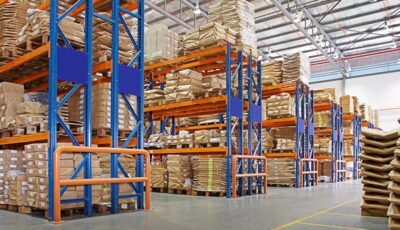
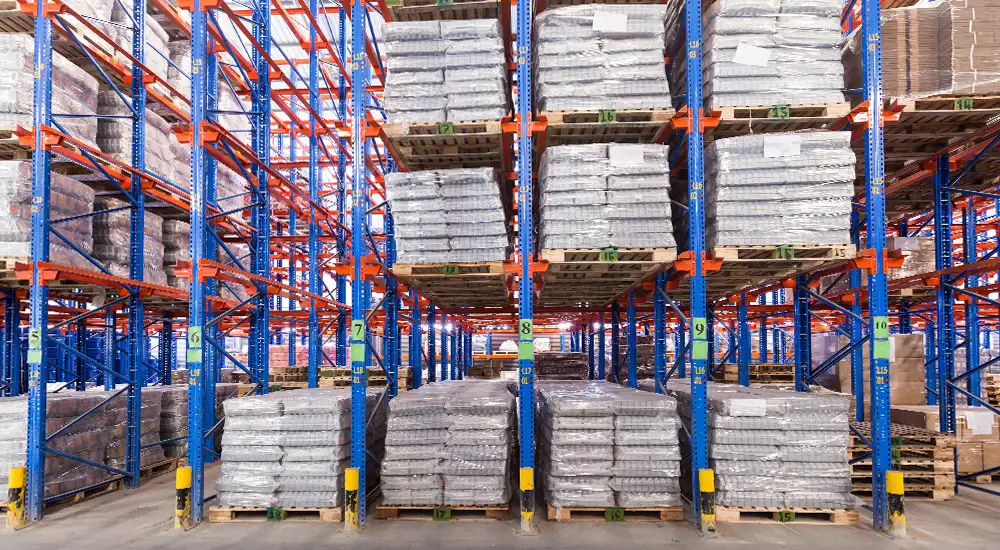
Drive-in racking is used in warehouses that need to store large volumes of similar products in a limited space. Instead of multiple aisles, forklifts drive directly into racking lanes to load and unload pallets. It is commonly installed as part of a warehouse fit-out or storage upgrade where space needs to be used more efficiently.
Quick Answer
What Is Drive-In Racking?
- high-density pallet storage system
- forklifts drive into racking lanes
- reduces aisle space
- increases storage capacity
- suited to bulk storage of similar products
Drive-in racking is a system where pallets are stored in lanes, one behind the other.
Forklifts enter the racking structure to place and retrieve pallets, rather than accessing them from separate aisles.
This setup works best when storing large quantities of the same product.
Key Components of a Drive-In Racking System
A typical system includes:
- upright frames
- pallet support rails
- entry guides for forklifts
- structural bracing
All components need to be installed correctly to ensure safe operation.
How Forklifts Operate in Drive-In Racking
Forklifts drive into the racking lanes and place pallets onto internal rails.
This requires:
- careful positioning
- consistent pallet sizes
- trained operators
Because forklifts operate inside the structure, the system must be installed and aligned properly.
Drive-In vs Drive-Through Racking
Drive-in racking:
- single entry point
- last-in, first-out (LIFO)
Drive-through racking:
- access from both ends
- first-in, first-out (FIFO)
The right system depends on how your stock moves.
Benefits of Drive-In Racking
- increases storage capacity
- reduces unused aisle space
- suits high-volume storage
- works well in cold storage environments
Where It Fits in a Project
Drive-in racking is usually installed as part of:
- warehouse fit-outs
- storage upgrades
- site reconfigurations
It is rarely a standalone job. It forms part of the overall warehouse setup.